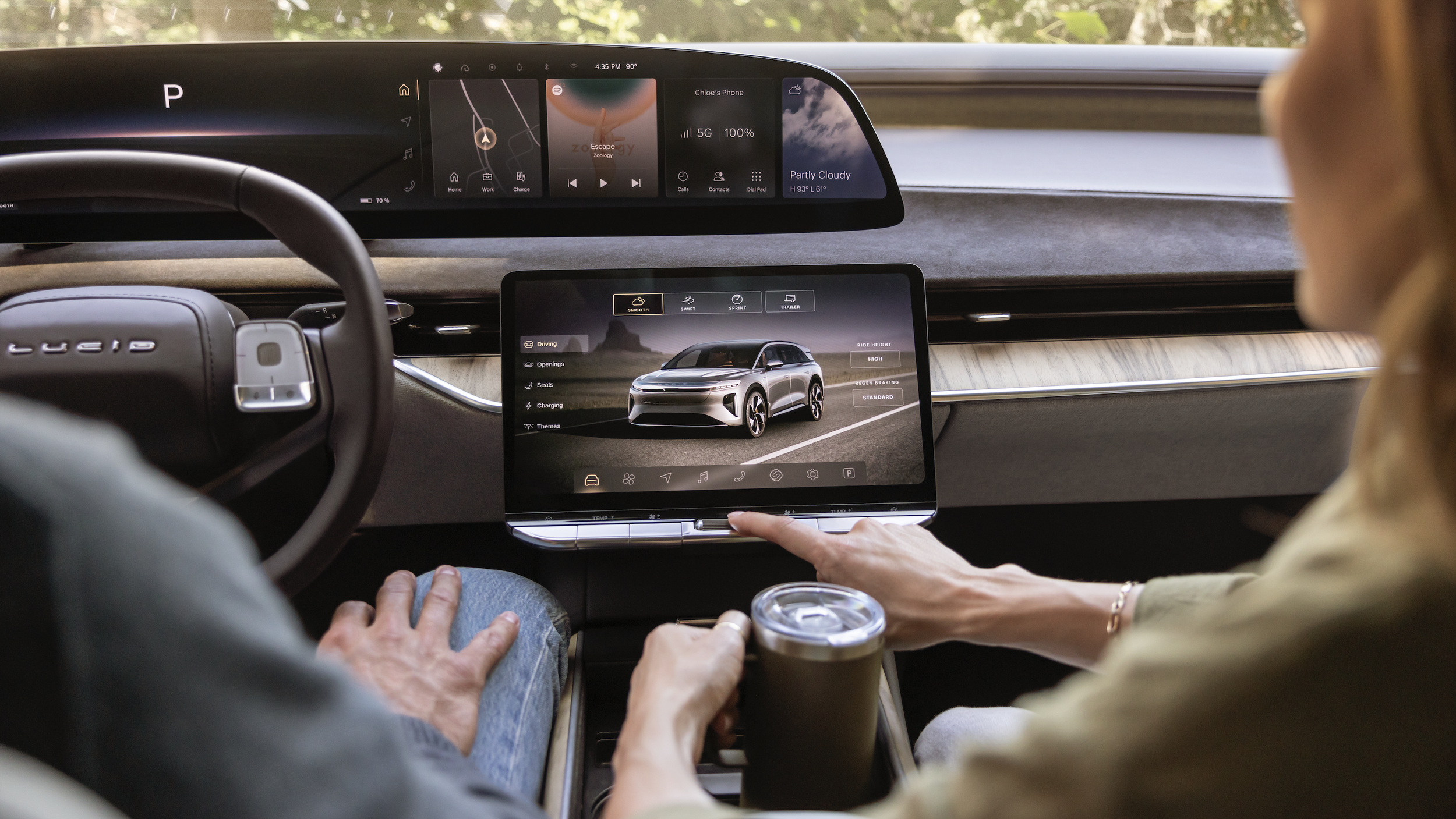
Lucid Gravity Infotainment
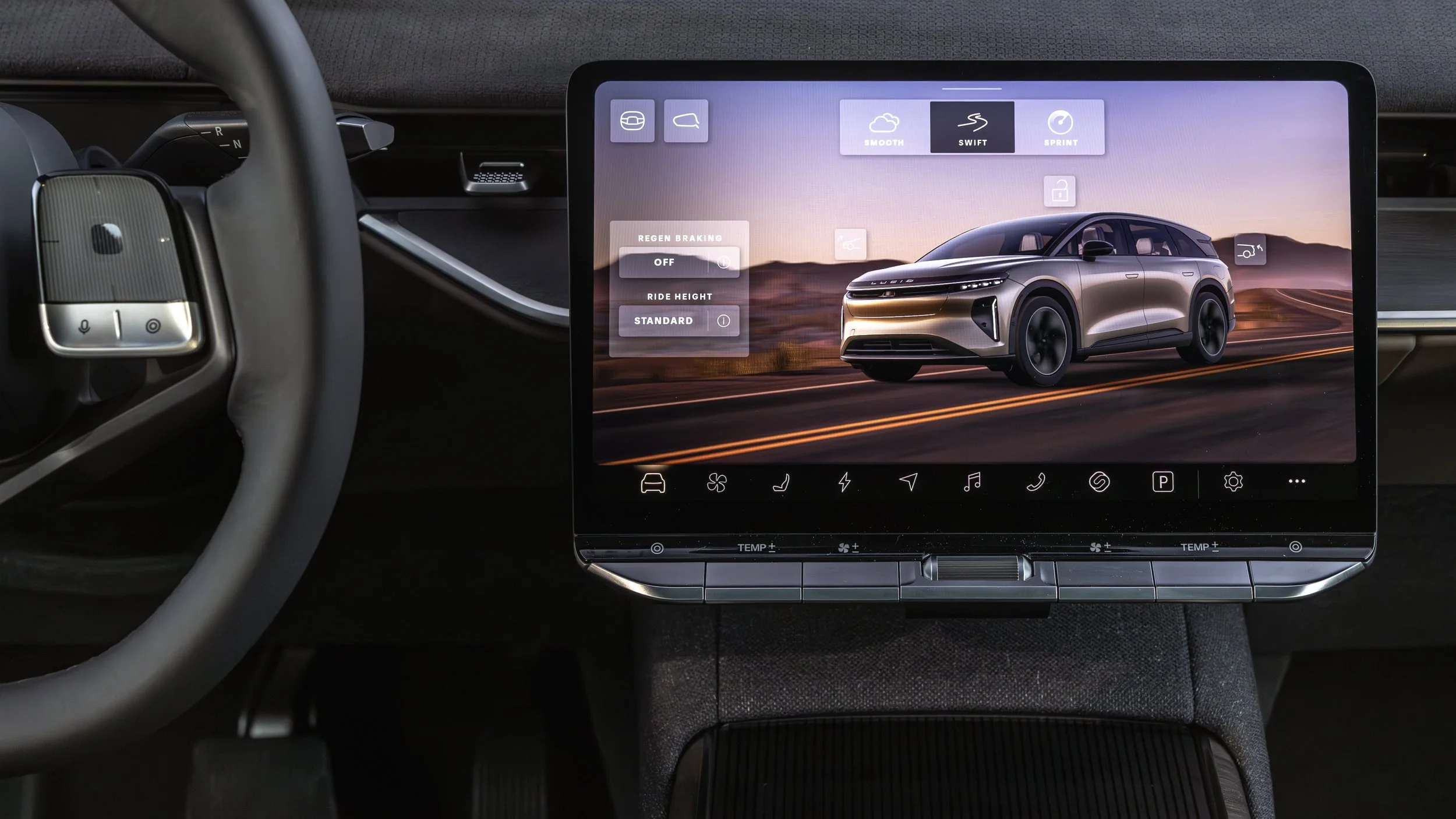
For the Lucid Gravity program, I led and contributed to design‑thinking‑driven research to shape infotainment, interaction models, and physical–digital integration for Lucid’s first SUV. The work spanned early concept exploration through evaluative user studies, informing product strategy and system‑level experience decisions.
Defining next‑generation infotainment and interaction paradigms for Lucid’s flagship SUV
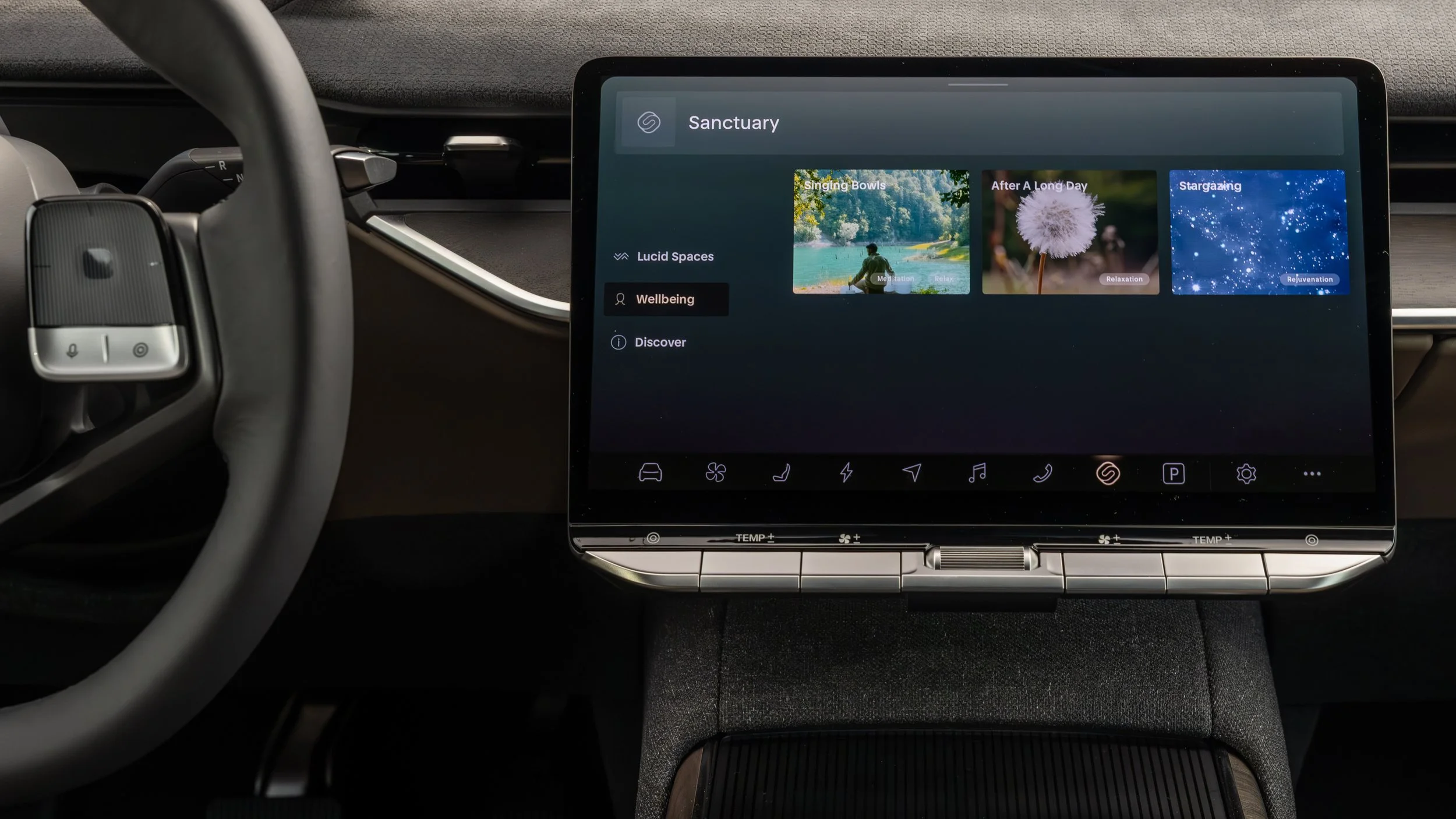
Design Thinking
Applied design thinking methodologies to explore future‑facing infotainment behaviors and interaction patterns specific to SUV use cases, including multi‑occupant scenarios, extended trips, and increased secondary task complexity. Insights synthesized user needs, vehicle context, and Lucid brand principles.
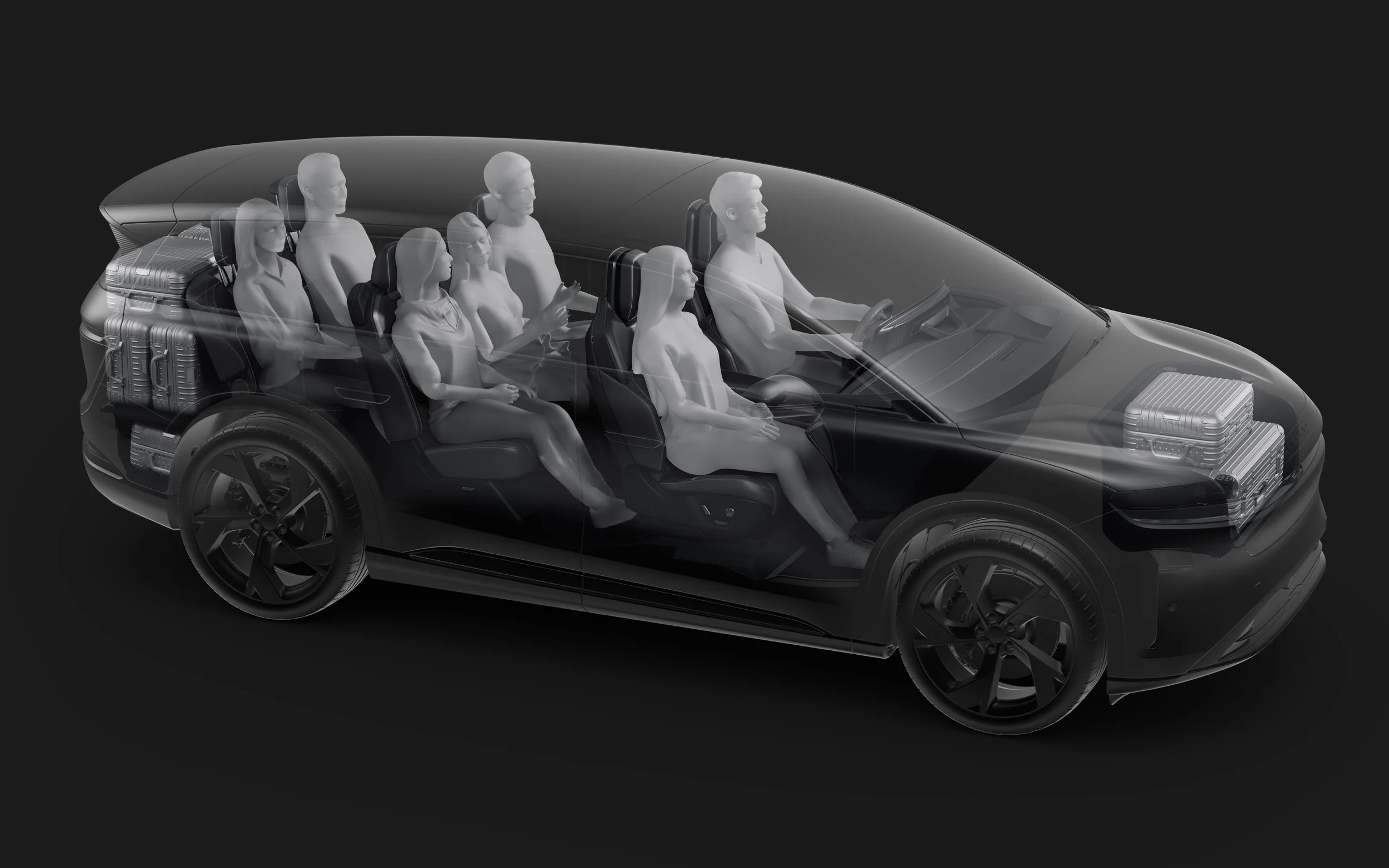
Product Strategy
Partnered with product management and UX leadership to translate research insights into strategic direction for Gravity’s infotainment and cabin experience, aligning long‑term vision with near‑term implementation constraints.
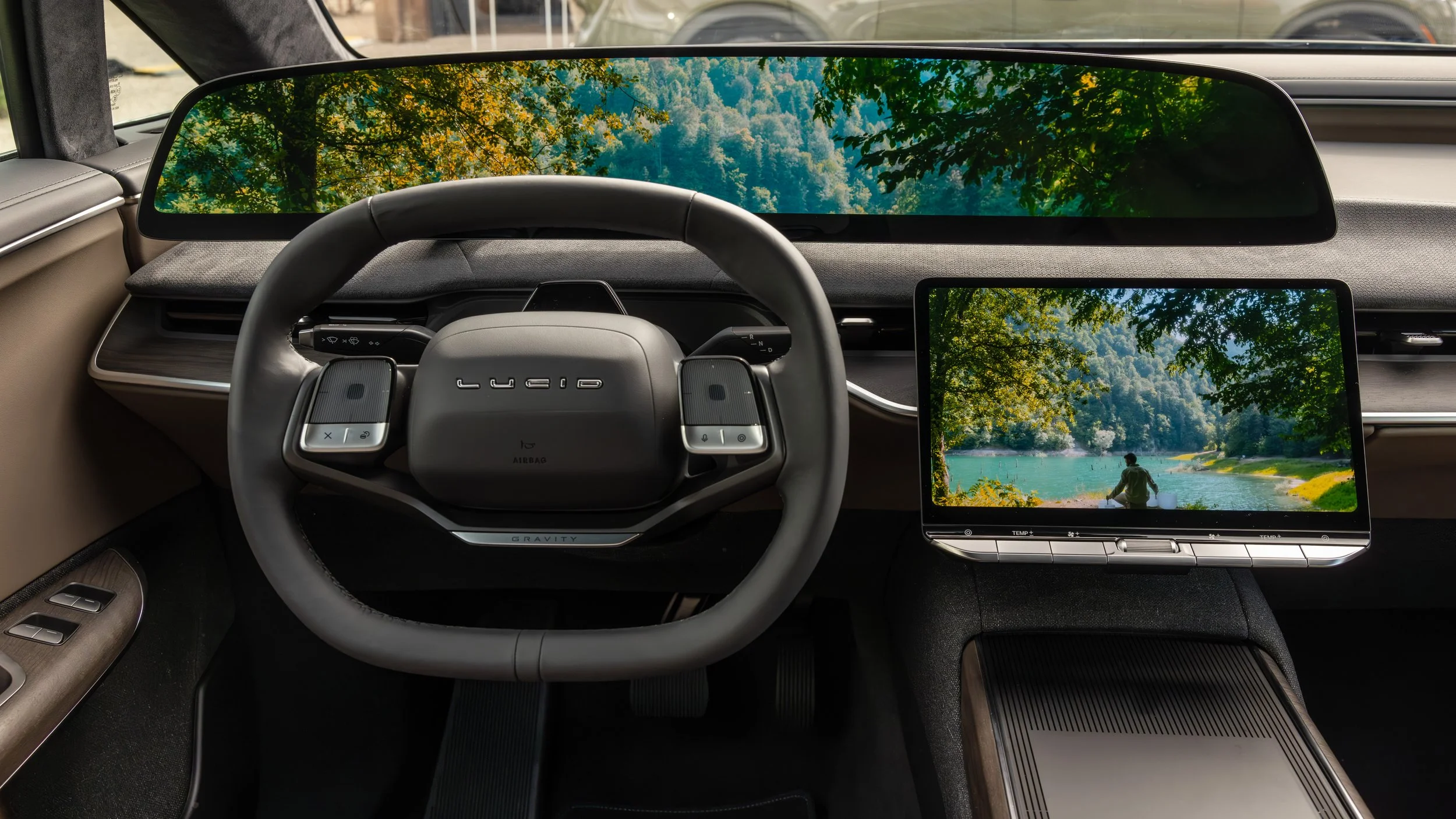
Hardware Controls Evaluation – Steering Wheel
Led and supported evaluation of steering wheel controls, focusing on discoverability, mental models, tactile affordances, and driver distraction. Research informed decisions around control layouts, interaction models, and the balance between touch, physical, and capacitive inputs in safety‑critical driving scenarios.
Concept Development & User Studies
Planned and conducted concept development, evaluation, and usability studies across infotainment systems, HMI controls, screen layouts, steering‑wheel and display obscuration, and interior interaction concepts. Findings guided refinement of Gravity’s interaction model prior to deeper engineering commitment.
Impact
Informed foundational decisions around Gravity’s interaction model and control strategy before production lock‑in
Reduced usability and safety risk by evaluating distraction and learnability in realistic driving contexts
Helped align infotainment and hardware decisions with Lucid’s premium SUV positioning